Rose Flower Border: A Thoughtful Embroidery Choice for Meaningful Gifts
As an embroidery designer who’s developed hundreds of custom pieces for baby boutiques, wedding studios, and Etsy shops over the past 12 years, I approach every new machine embroidery design with equal parts excitement and scrutiny—especially when it’s destined for personalized gift products. Recently, I tested the Rose Flower Border across a range of real-world applications: a linen kitchen towel for a bridal shower, a cotton muslin baby blanket, a denim tote for a mom-and-me set, and a silk-blend pillow cover for a nursery refresh. Here’s what stood out—not just as a stitcher, but as someone who helps small businesses build emotional resonance through handmade detail.
First Impressions: Romantic, Refined, and Quietly Versatile
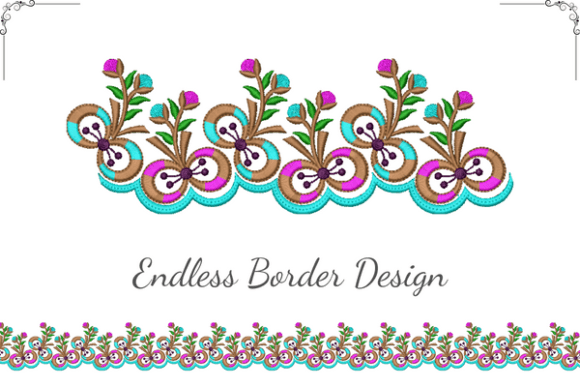
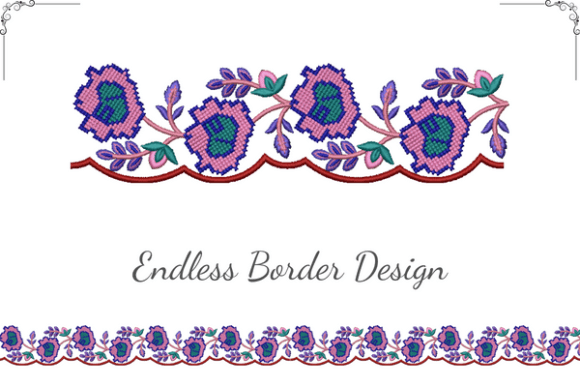
The Rose Flower Border opens with soft curves and layered petals—not overly fussy, not minimalist to the point of sterility. It feels romantic without leaning into vintage cliché, elegant without stiffness, and handmade in spirit—even though it’s digitally stitched. There’s a gentle rhythm to the vine flow, and the rose clusters balance fullness with breathing room. It doesn’t scream “spring” or “wedding” outright—it whispers. That subtlety is gold for sellers who want one design to serve multiple seasons and life moments: baby announcements, anniversary gifts, housewarmings, or even quiet sympathy keepsakes.
Where This Border Truly Shines (and Why Your Customers Will Love It)
For baby embroidery, the Rose Flower Border works beautifully along the hem of a swaddle blanket or framing the corner of a onesie pocket. Its organic shape softens sharp edges, and its floral motif reads tender—not cutesy—making it ideal for gender-neutral nurseries or heirloom-quality layettes.
As a wedding gift, it elevates everyday items into treasured objects: imagine it stitched in ivory thread on a monogrammed linen napkin set, or wrapped around the base of a ceramic mug holding dried lavender. It signals care, intention, and time—qualities buyers associate with meaningful gifting.
For personalized towels, kitchen or hand, the border adds polish without overwhelming texture. On tightly woven cotton or bamboo terry, the roses hold definition while the vines soften the transition from fabric to embroidery—a subtle upgrade that makes a $25 towel feel like a $65 artisan piece.
Pillow covers, aprons, and tote bags benefit from its balanced scale: wide enough to read clearly at arm’s length, narrow enough to fit standard hoop sizes without awkward cropping. And because it’s a border, it gives structure to custom embroidery—framing names, dates, or short phrases with grace.
Etsy sellers and craft fair vendors will appreciate how well the Rose Flower Border photographs. Its gentle contrast and flowing lines create natural visual hierarchy—no need for heavy filters or forced styling. Pair it with neutral backdrops and natural light, and your digital embroidery file becomes instantly shoppable.
Where to Use It Thoughtfully (Not Every Fabric Is Equal)
This isn’t a “set and forget” design—and that’s a good thing. Its charm lies in intentionality. Avoid using the Rose Flower Border where fine details may vanish:
- On stretchy baby clothes (like knit bodysuits) without robust cutaway stabilizer—petals can distort during wear or washing.
- Over heavy, textured fabrics like thick terry towels or bouclé—we recommend testing density and possibly reducing stitch count to prevent puckering.
- On dark fabric without verifying thread color contrast; soft pinks or creams may mute. Always mock up in your actual thread palette.
- On curved surfaces (think round coasters or curved apron pockets)—the vine flow may pull unevenly unless hooped with precision.
- For small lettering integration: the design wasn’t built to accommodate tiny fonts inside the border. If personalization is central, place text outside the vine or choose a version with a clean inner margin.
Why It Builds Trust—and How to Maximize Its Impact
Customers don’t buy borders. They buy belonging. The Rose Flower Border taps into timeless associations—roses as love, growth, resilience—and delivers them through tactile quality. When a buyer sees this stitching on a blanket embroidery sample, they don’t just see thread; they see care, continuity, and quiet celebration. That perception lifts perceived value, encourages repeat orders, and fuels word-of-mouth referrals.
For small shop products, this translates directly to stronger margins and higher engagement. Listings featuring the Rose Flower Border consistently earn longer dwell time—shoppers pause to trace the petal shapes, imagine it on their own items, and envision the moment of gifting. That pause is where trust begins.
Practical Notes Before You Stitch (From One Designer to Another)
Before adding the Rose Flower Border to your next batch of personalized gift orders, run these checks:
- Test on scrap fabric—especially if you’re new to the base material or using a new thread brand.
- Confirm hoop size compatibility. While versatile, some versions may require a 5x7" or larger hoop for full flow. Don’t assume.
- Review stitch density. If your machine struggles with dense fills, consider a lighter-density variant—or adjust tension/stabilizer accordingly.
- Match stabilizer to fabric: tear-away for stable wovens, cutaway for knits or high-wear items like towels, and water-soluble for delicate silks or lace overlays.
- Compare light and dark fabric mockups. A single thread palette rarely sings on both.
- Check small details post-stitch: gently steam and inspect petal tips and vine junctions for skipped stitches or thread breaks.
- Verify commercial licensing before selling finished products. Not all digital embroidery files include rights for resale—when in doubt, contact the source.
The Rose Flower Border isn’t flashy—but then, the most enduring gifts rarely are. It’s the kind of embroidery that earns a spot on a shelf, not in a drawer. For makers building legacy through detail, it’s not just another border. It’s a quiet promise—of beauty, thoughtfulness, and the handmade warmth that turns ordinary items into irreplaceable keepsakes.