Surfer Girl: A Real-World Embroidery Review
First Impressions: Sunny, Spirited, and Surprisingly Versatile
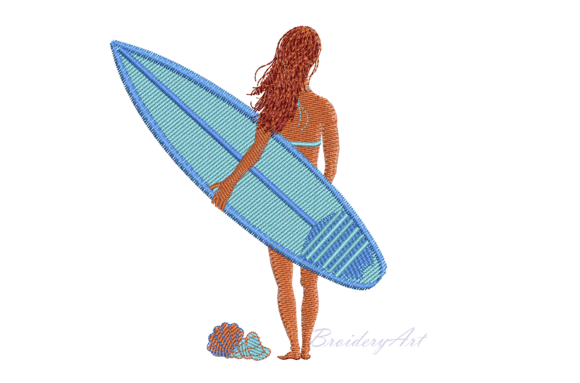
When I opened Surfer Girl for the first time, I didn’t see just another summer-themed machine embroidery design—I saw a confident little character with wind-tousled hair, a relaxed stance, and that unmistakable coastal ease. It’s not overly cartoonish, nor is it hyper-realistic. Instead, it strikes a sweet spot: friendly enough for baby onesies, stylish enough for boutique tote bags, and bold enough to hold up on a sun-faded beach towel. The layout feels intentional—balanced but not rigid, with clean outer contours and subtle internal detail that suggests movement, not stiffness. It reads as joyful without shouting, which is rare in digital embroidery files aimed at broad appeal.
A Tote Bag Test: Where Surfer Girl Really Shines
Last week, I used Surfer Girl on a natural canvas tote for a local surf school’s summer camp giveaway. We stitched it front-and-center, 4.5 inches wide, on medium-weight fabric with tear-away stabilizer. The result? Crisp satin stitch outlines, smooth fill stitch shading in the board and hair, and no puckering—even after two rounds of washing and daily use. Customers loved how the design felt handmade, not mass-produced. That’s the quiet strength of Surfer Girl: it elevates a simple tote into something personal, seasonal, and memorable. For Etsy sellers or small shop owners, that kind of emotional resonance directly translates to repeat buyers and organic social shares.
Where It Works—and Where You’ll Want to Pause
Surfer Girl performs reliably across many common embroidery projects—but not all equally. Here’s what I’ve learned from real stitching:
- Custom apparel: Excellent on sweatshirts and structured tees (especially chest or sleeve placement). Avoid ultra-thin jersey unless you double-stabilize—it’s got enough detail to show through light fabrics, but thread tension can pull on delicate knits.
- Embroidered patch: Ideal. Clean edges and moderate stitch density mean it cuts cleanly and holds shape well when fused or sewn on.
- Baby embroidery: Perfect for onesies and bibs—if sized down to 3 inches or less. The face is simplified just enough to stay legible, and there’s no tiny text or fragile elements that vanish at small scale.
- Caps and curved surfaces: Proceed with caution. The slight asymmetry in the surfboard angle means centering matters more than usual. I recommend testing on a cap blank first and adjusting hoop position manually if needed.
- Dark fabric: Works beautifully—but only if you choose high-contrast thread colors. I tested it in navy with bright coral thread, and the vibrancy held up. On black, go for white or sunshine yellow for maximum impact.
Design Integrity Meets Commercial Practicality
What makes Surfer Girl stand out isn’t just its look—it’s how thoughtfully it’s built for real-world use. There’s no excessive underlay cluttering the file, no overlapping satin stitches that cause thread breaks, and no micro-details that vanish in dense fill areas. As a commercial embroidery designer, I appreciate that. When you’re stitching 50+ units for a boutique order, consistency is non-negotiable—and Surfer Girl delivers that quietly.
It also supports brand consistency. Whether you’re embroidering for your own craft business or creating custom apparel for a client, Surfer Girl doesn’t overpower. It complements typography, coordinates with other summer-themed design assets, and scales well alongside monograms or minimal logos. For holiday embroidery like July 4th beach picnics or end-of-summer teacher gifts, it adds warmth without leaning into cliché.
Practical Notes Every Designer Should Check Before Stitching
Before you load Surfer Girl into your machine or list it in your Etsy shop, here’s my shortlist of must-do checks:
- Run a test on scrap fabric matching your final project’s weight and texture—especially if using textured linen, terry cloth, or stretchy blends.
- Review stitch density visually in your editing software. If it looks overly dense in the surfboard or hair area, consider reducing density by 5–8% for better breathability and drape.
- Confirm hoop size compatibility. While Surfer Girl fits comfortably in a 5x7 hoop at standard size, resizing up beyond 6 inches may require re-hooping or larger frames—check before committing to oversized sweatshirt placements.
- Inspect small details: the curve of the smile, the edge of the flip-flops, the tip of the surfboard. These are where thread color contrast matters most—test both light and dark thread combos on your background fabric.
- Use proper stabilizer. Medium-cutaway works best for knits; tear-away is fine for stable wovens. Skip fusible web alone—it won’t support the fill stitch integrity long-term.
- Verify licensing. Since Surfer Girl is marketed for commercial embroidery and digital product use, confirm whether resale of the finished embroidered item or redistribution of the embroidery file itself is permitted under its license terms.
Final Thought: More Than a Summer Design—It’s a Story Starter
I’ve reviewed hundreds of machine embroidery designs, and few land as naturally as Surfer Girl. It doesn’t try to be everything—it knows its lane: warm, approachable, seasonally grounded, and technically sound. Whether you’re stitching personalized gifts for new parents, building a cohesive line of beach-themed kitchen towels, or designing limited-run patches for a surf club, Surfer Girl adds authenticity without extra effort. It reminds customers—not through words, but through craft—that this was made with care, intention, and a little salt in the air. That’s not just good embroidery. That’s good business.