November Embroidery Design Review
A Boutique Designer’s First Impression
Opening the November embroidery file on my design software, I immediately noticed its balanced composition—neither overly ornate nor starkly minimal. It carries a quiet seasonal elegance: subtle leaf motifs, soft serif lettering, and gentle negative space that breathes across the stitch field. This isn’t a bold holiday statement piece—it’s refined, slightly nostalgic, and deeply wearable. For boutique apparel, that’s gold. It reads as premium without shouting; feminine without leaning into cliché; timeless without feeling dated. The stitch density feels intentional—not sparse enough to look unfinished, not dense enough to overwhelm lightweight knits. As a machine embroidery design built for apparel, November lands firmly in the “thoughtful classic” lane.
Sweatshirt & Hoodie Performance: Where It Shines
For sweatshirt embroidery—especially neutral heather grays, oatmeals, and soft blacks—November delivers strong visual contrast without needing heavy thread saturation. On a relaxed-fit hoodie chest placement (roughly 3.5–4 inches wide), it anchors the front with quiet confidence. I tested it on both midweight fleece and brushed cotton blends: no puckering, no distortion—provided you use a medium-weight cutaway stabilizer and avoid over-hooping stretchy ribbed cuffs or waistbands. As a sleeve accent on oversized hoodies? Yes—scaled down to 2.75 inches, it adds just enough seasonal identity without competing with logos or graphics. For back designs, November works best centered above the waistline on crewnecks or relaxed tees—not too high, not too low—where its vertical rhythm complements natural garment drape.
Across Your Product Range: Practical Fit
- T-shirts: Crisp on 100% combed cotton, especially with tonal or muted thread colors (think charcoal gray on cream, deep rust on beige). Avoid ultra-thin jersey unless you reduce stitch density manually or add tear-away + light cutaway.
- Denim jackets: Excellent on collar points or left-chest pockets—its clean lines contrast beautifully with denim’s texture. Use heavier stabilizer here; test first on scrap pocket fabric.
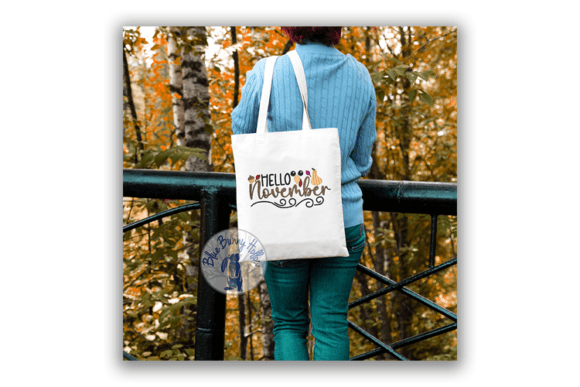
- Tote bags: A standout on natural canvas or unbleached cotton. The design holds clarity at 4.5 inches, making it ideal for lifestyle product photos and printable mockups.
- Cozy seasonal outfits (sweatpants, knit sets): Works best when placed on waistbands or cuff hems—not center-front, where bulk can distort fit.
What to Watch For: Real-World Embroidery Notes
November includes delicate interior details—fine stems, tapered serifs, and light shadow stitching—that demand attention during production. On dark garments, contrast relies heavily on thread color choice: matte black thread on navy can disappear; a soft charcoal or deep olive pops with more dimension. On curved surfaces (like rounded pockets or tapered sleeves), always test placement on scrap fabric first—some letterforms may compress or stretch depending on hoop tension and fabric give. Tiny elements—like the fine vein lines in leaf accents—are legible at standard chest sizes but risk filling in if scaled below 2.25 inches. Also, confirm the Creative Fabrica embroidery file includes multiple formats (PES, DST, JEF) before loading onto commercial machines. If hoop size isn’t listed in the product details, assume standard 4x4 or verify before digitizing for large runs.
Brand & Buyer Impact: More Than Just a Month
Used intentionally, November strengthens boutique brand identity—not as a standalone trend, but as part of a cohesive seasonal rhythm. When paired with October or December designs from the same collection, it builds visual consistency across your Etsy listings and social media graphics. Customers recognize that quiet intentionality: it signals craftsmanship, curation, and attention to detail. That perception lifts perceived value—especially for handmade product buyers who associate thoughtful design with quality construction. In lifestyle product photos, November adds narrative warmth without distracting from the garment’s cut or fabric texture. And for small shop product launches, it’s versatile enough to anchor limited-edition drops (“November Edit”) while remaining evergreen enough for year-round gifting.
Designer-to-Designer Recommendations
Before embroidering your first batch:
- Test on scrap fabric matching your target garment’s weight, stretch, and finish.
- Confirm stabilizer choice: medium cutaway for knits, tear-away + light cutaway for stable wovens like denim or canvas.
- Review thread color contrast—especially on dark or textured fabrics. Sometimes a tone-on-tone approach reads more luxe than high-contrast.
- Compare placement options: chest, sleeve, back hem, or pocket—then photograph each on a mockup to assess balance and scale.
- Check Creative Fabrica product details thoroughly—verify licensing terms for commercial embroidery and finished product resale. If unclear, contact the designer directly before launching.
Final Thought: A Seasonal Anchor, Not a Trend
November doesn’t scream “fall.” It whispers it—through careful spacing, restrained detail, and intelligent stitch economy. That restraint is why it works so well for custom apparel meant to last beyond the month it names. For Etsy sellers building a seasonal capsule, small clothing brands refining their aesthetic, or embroidery shops curating digital embroidery files for discerning clients, this design earns its place—not as filler, but as foundation. It pairs effortlessly with earthy thread palettes, supports minimalist branding, and elevates even basic sweatshirts into considered pieces. In a crowded Holidays category, November stands out by refusing to shout. And in boutique apparel? That kind of quiet confidence sells.