Beach Patch Review for Small Business Merch
First Impression: Friendly, Handmade, and Professionally Refined
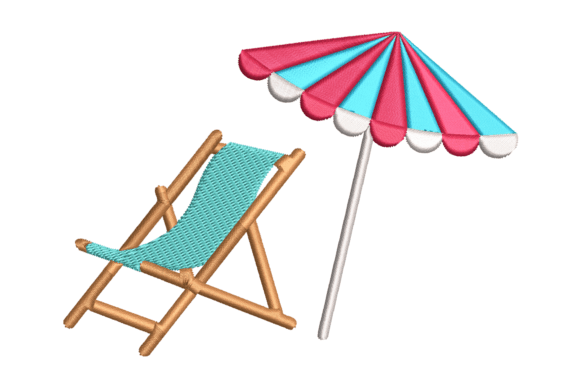
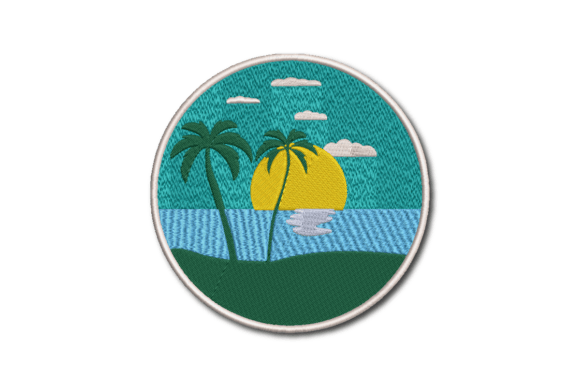
As an embroidery designer who’s developed hundreds of commercial embroidery files for small businesses—from coastal cafés to handmade florist studios—I opened Beach Patch expecting a sun-drenched cliché. Instead, I found a design that balances approachability with polish: clean lines, intentional negative space, and a subtle organic rhythm that reads as both handmade and intentional. It doesn’t shout “vacation”—it whispers “local charm.” That duality makes Beach Patch ideal for brands that want warmth without whimsy, authenticity without amateurism. Whether you’re stitching for a seaside bakery or a boutique pet brand, this machine embroidery design feels like it belongs—not as decoration, but as identity.
Real-World Performance Across Business Applications
Beach Patch shines where small business merch lives: on staff aprons, front-of-cap branding, tote bag corner accents, and sleeve details for custom apparel. Its moderate stitch density means it holds up beautifully on mid-weight cotton twill (think café aprons), linen-blend tote bags, and structured trucker caps—without puckering or thread breakage under standard commercial embroidery conditions. For Etsy sellers and craft businesses, it works exceptionally well as an embroidered patch sewn onto product packaging, greeting cards, or handmade product tags—adding tactile credibility to otherwise flat items.
In uniform settings—like a coastal florist’s navy work shirts or a local brewery’s tan canvas jackets—the design maintains clarity at 2.5"–3.5" widths. As a chest logo accent, it communicates place and personality without overwhelming the garment. When scaled down to 1.75" for cap fronts, the core elements remain legible, though I recommend avoiding sub-1.5" applications unless you’ve confirmed the digital embroidery file includes optimized small-size variants.
Where to Use Beach Patch Thoughtfully
Like any strong embroidery file, Beach Patch rewards intentionality. Avoid placing it directly on highly textured fabric (e.g., heavy bouclé or raw-edge burlap) without testing stabilizer combinations—its clean outlines can blur if the base fabric shifts during stitching. On dark uniforms, confirm thread color contrast early; light ecru or soft seafoam threads may need a white underlay layer to pop. Similarly, curved surfaces like cap crowns or rounded tote handles demand careful hooping and possibly digitized contour compensation—check whether the embroidery file includes built-in curve adaptation or requires manual adjustment.
Also note: the product description cautions that modifying the file may impact the final outcome. That’s critical for small business owners outsourcing embroidery. If your shop adjusts lettering, repositions elements, or rescales beyond recommended ratios, stitch density and tension balance could shift—leading to inconsistent finished product quality across batches. Always request a physical sample before full production.
Brand Identity Impact: More Than Just a Logo
For small businesses building recognition through tactile consistency, Beach Patch functions as a quiet brand amplifier. Unlike generic clipart-style beach motifs, its restrained composition supports visual cohesion—pairing seamlessly with minimalist typography, natural packaging, or hand-lettered signage. Customers notice that alignment: when your tote bag, apron, and product label all carry the same confident, unhurried energy, trust deepens. It signals care—not just in service, but in presentation.
That perception lifts perceived value. A handmade soap brand using Beach Patch on kraft-paper labels and linen pouches reads premium, not DIY. A pet wellness studio applying it to bandanas and staff vests projects calm authority—not just coastal vibes. In short: this isn’t background decor. It’s a brand asset that earns its place on every touchpoint.
Practical Designer Notes for Commercial Use
Before stitching Beach Patch into your next client project or inventory run, here’s what I do—and recommend you do too:
- Test in black and white first. Print a grayscale version to assess contrast, spacing, and silhouette integrity—especially if adapting for dark fabric.
- Verify small-patch viability. Stitch a 1.75" version on your target fabric/stabilizer combo before approving for cap fronts or tiny product tags.
- Review thread color pairings deliberately. Try sand, deep teal, and warm charcoal—not just classic navy or white—to match your brand palette.
- Inspect spacing and underlay. Tight corners or overlapping elements can trap thread; ensure no gaps exist between key shapes at production scale.
- Confirm hoop size compatibility. Match your frame to the design’s largest dimension—don’t force a 4" wide patch into a 3.5" hoop.
- Test on real fabric—not just tear-away stabilizer. Run a sample on your actual apron twill or tote canvas to check for pull, distortion, or sheen shift.
- Create a printable mockup for client approval. Show how Beach Patch integrates with their existing design assets—not as a floating icon, but in context.
- Compare alongside other embroidery files. Does it hold equal weight beside your primary logo? Does it complement—not compete with—your sleeve monogram or tagline?
- Confirm commercial licensing before business use. Since the description notes file modification risks, verify usage rights cover resale, branded merchandise, and wholesale distribution.
Finally, remember: the best embroidered patch isn’t the most detailed—it’s the one that strengthens your story every time it’s seen, touched, or gifted. Beach Patch does exactly that—not by shouting “beach,” but by quietly saying, “This is who we are.” For small business merch, custom apparel, apron embroidery, cap embroidery, tote bag design, and every stitched detail in between, that subtlety is its greatest strength.